Category Archives: News

Sad fate of a 140-year-old Jewish property in Bangladesh

By Joseph Jude Edward

APRIL 20, 2023
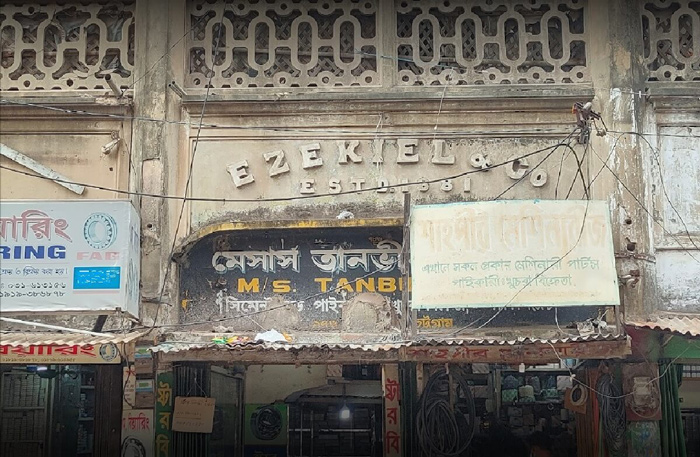
This building is located in 3 Strand Road, Chittagong (Chattogram) 4000, Bangladesh. The building is at the entrance of Sadarghat Road approximately 100 meters away from the General Post Office (GPO).

Looking back into the history, in 1881, the Ezekiel family established their business as sugar manufacturers and distillers. Then, on April 18, 1929, David Ezekiel had executed a power of attorney in favor of his nephew, Solomon Ezekiel. At that time David was the proprietor of two businesses, one known as Davidson & Co. that continued on in Calcutta, and the other known as S. Ezekiel & Co. that continued on in Chittagong. Both the businesses traded in general stores and wines and spirits.

The Ezekiel family built the building in Chittagong during the time of the Bengal Presidency, which was officially the Presidency of Fort William and later Bengal Province, a subdivision of the British Empire in India. After the India/Pakistan partition in 1947, their business continued to stay in operation in East Pakistan (now Bangladesh). However, shortly after the India/Pakistan partition in 1947, all the members of this family migrated to other countries. At that time there were only 5 to 6 Jewish families left in the whole of then East Pakistan (now Bangladesh).

Within the Ezekiel & Co. building in Chittagong, there was a store and other family businesses. Their main occupation was sugarcane cultivation and making alcoholic beverages in Jessore, Kushtia and Nadia areas. Davidson & Co (later incorporated as Davidsons Ltd), became the forerunner of Carew & Co under the Pakistan government. After the Independence of Bangladesh, the government of Bangladesh later nationalized the distillery at Darsana in 1973 which is currently known as Carew & Co. (Bangladesh) Ltd.

The Ezekiel & Co, building is over 140 years old. It carries the identity and heritage of a Jewish people who once lived in Chittagong.

The building was reported to be recently demolished, but several individuals from Chittagong have claimed the building is still standing.

Meanwhile, this message from Mrs. Jo Cohen provides more history:

“I found the article on the family very interesting. I had not heard about them before, but this seems to explain Shalva Weil’s assumption that my husband’s family, the Cohens of Rajshahi, sold liquor. She must have confused the two. The Cohens sold bicycles and also repaired bicycles and motorcycles, and sold spare parts and household goods like paraffin lamps and Primus stoves.

My father, Philippe E. Orian, was employed by Carew & Company after WWII to run the sugar factory at Darsana, just over the border of what was then East Pakistan. He set up the distillery and pharmaceutical works. I lived in Darsana as a very small child, and one of my earliest memories is being rushed out of the house by my parents late one night when there was quite a severe earthquake.

We had a big white two storied house with a wide verandah, and a big garden. I remember gul mohur trees, hibiscus, jasmine and plumeria, golden Orioles building their nests in the palm trees beside the lawn, jackfruit, guavas, and huge papayas. Papa was fond of hunting, and I had a small coat made from the skin of hares that he had shot.

We had to come to Calcutta for any shopping, travelling by train. I still remember the green imitation leather that covered the seats, the smell of the smoke from the coal-fired engine and the grit that would get into my eyes, the dip and swoop of the electric wires on poles beside the tracks, and the way we would rush to have a bath when we arrived! I must have been six or seven years old when we left Darsana, and though I visited Bangladesh with my husband, I have never been back. Childhood memories and a good deal of nostalgia are all that remain”.

This video was received that seems to show the building is still standing, but its future fate is unknown:
Sub-Saharan African Jewish Alliance formed in the aftermath of Kulanu conference

SAJA seeks to unite the continent’s emerging communities.

BY AVI KUMAR

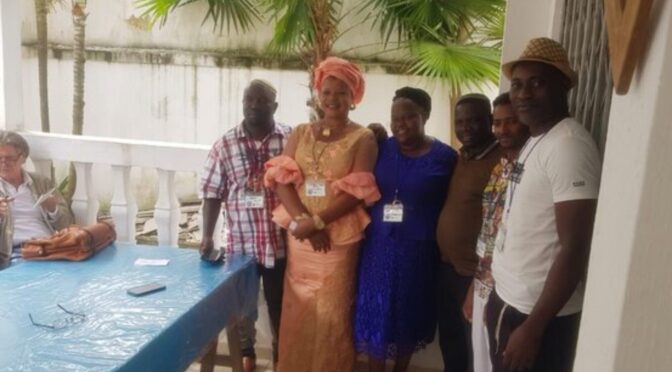
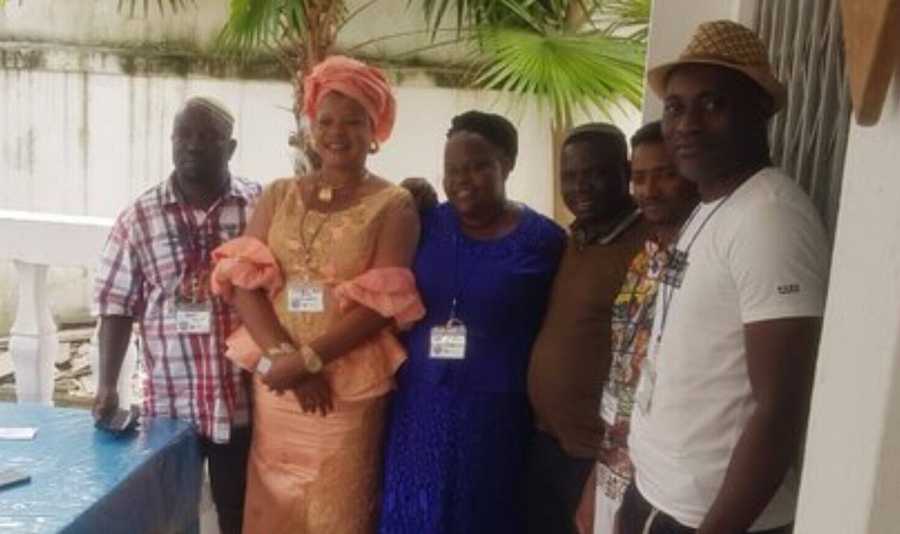
Participants at the Kulanu gathering in Abidjan, Ivory Coast, earlier this month. Credit: Serge Etele.

(December 30, 2022 / JNS) – The Sub-Saharan African Jewish Alliance was founded this month, with the goal of facilitating ties among the continent’s Jewish groups. The organization will include representatives from Tanzania, Madagascar, Ethiopia, Zimbabwe, Ghana, Ivory Coast, Nigeria, Kenya and Cameroon.

The SAJA was established after representatives of Jewish communities across sub-Saharan Africa gathered for the first time in Abidjan, Ivory Coast, this month to discuss various aspects of Judaism and Jewish life in the region.

SAJA has a temporary board with Mordreck Maersara from Zimbabwe currently serving as acting president. The group aims to draft a constitution and hold elections for a permanent board in the next six months. It also has a vice president and treasurer, and intends to add more positions to the roster after the constitution is finalized.

Maersara told JNS, “Our goal is to help each other by discussing both shared successes and challenges to aid each other to grow in our Judaism across Africa.”

Click here to read the full article on the Jewish News Syndicate website.

Zambia To Get First Rabbi In Six Decades

December 28, 2022

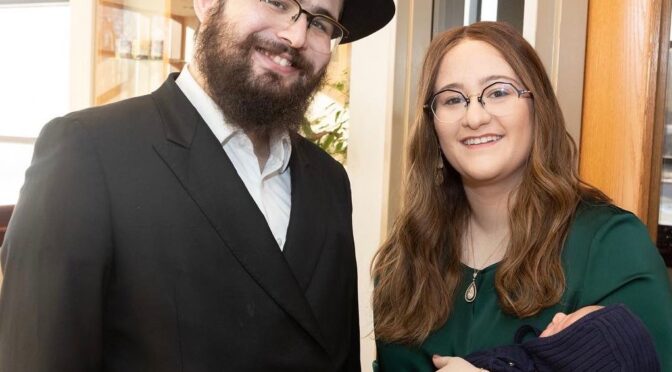
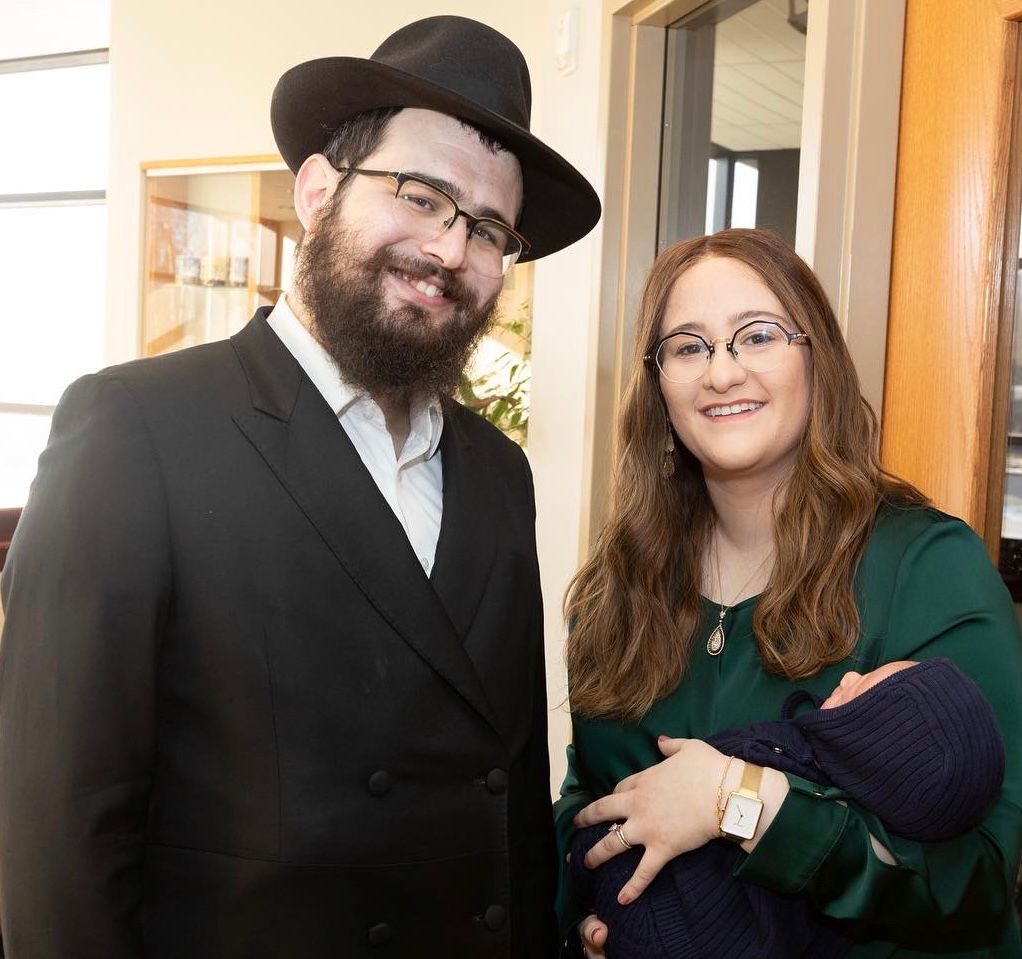
Rabbi Mendy and Rivky Hertzel

Rabbi Mendy and Rivky Hertzel will move to Zambia early next year to establish a Chabad House and assist the small but thriving Jewish community in the southern African nation. Zambia has not had a rabbi in over 60 years.

Rabbi Hertzel told JNS, “In February of this year, they tasked me to go to Zambia and investigate the possibility of establishing a permanent Chabad presence here. After a three-month stay, I saw firsthand that the country was a good fit for us to establish a Chabad House. So, I will be moving to Africa very soon and we are looking forward to this.”

Mendy is from the Golan Heights and his wife hails from Alaska. The newlywed couple will oversee operations in Zambia, joining the ranks of more than a hundred countries and territories where Chabad is active.

There are an estimated 100-150 Jews in the country of almost 20 million people. The Jewish community has diverse roots, including South African and Israeli ex-pats working in a variety of professions, and around 30-50 are Zambian citizens.

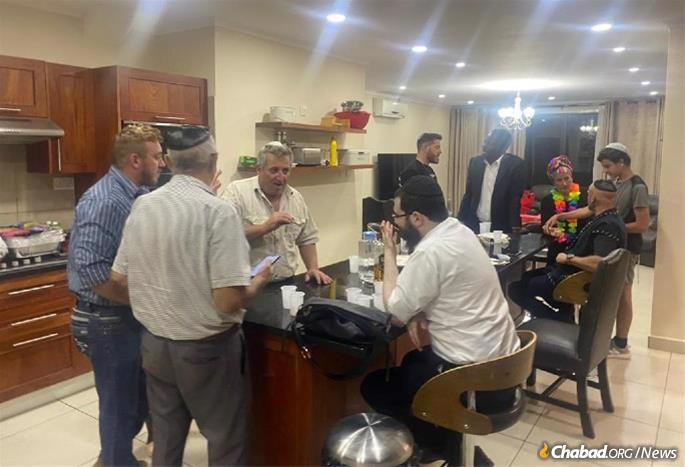
Jewish community members in Zambia, including Shlomo Abutbul, center, welcomed Rabbi Mendy Hertzel, right, to Lusaka on Purim.

The first Jews to arrive in Zambia were Ashkenazim from Eastern Europe (mostly Lithuania) who migrated in the 19th century when it was a British colony. A few Sephardim also came, including the Katzenellenbogen family from Germany.

The main waves of migration came during the several diamond and gold rushes; other newcomers were pioneers in the cattle industry, copper mining and agriculture. Jewish merchants were active.

Some of the descendants of the early Jewish settlers still live in Zambia. The nation had its first Jewish wedding in 1905. During World War II, a few Holocaust survivors arrived, mostly from Germany and Lithuania fleeing Nazi persecution, seeking refuge in the furthest place they could reach.

The Jewish population peaked in the 1960s at around 2,000. However, the community dwindled as part of a larger white emigration. Many Zambian Jews moved to the United Kingdom, Australia or Israel.

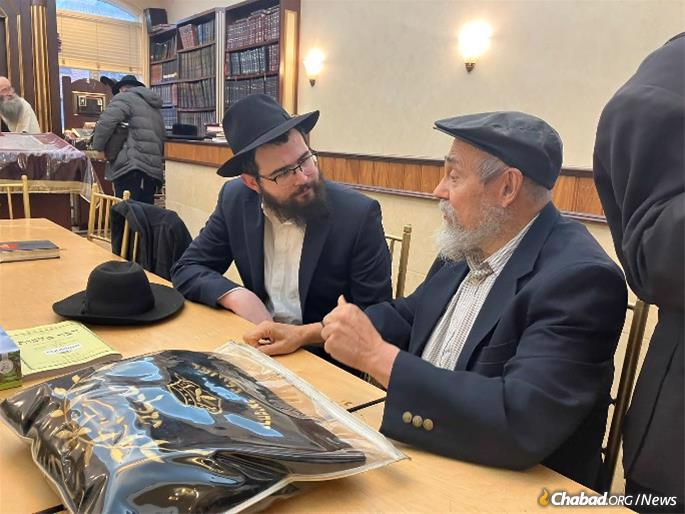
Yerachmiel Glazer, a Zambian Jew who had extensive correspondence with Rabbi Menachem M. Schneerson about the Jewish community there, speaks with Hertzel at the Kinus Hashluchim. Glazer was the Rebbe's first emissary to Zambia.
Yerachmiel Glazer, a Zambian Jew who had extensive correspondence with Rabbi Menachem M. Schneerson about the Jewish community there, speaks with Hertzel at the Kinus Hashluchim. Glazer was the Rebbe’s first emissary to Zambia.

Lusaka, the capital and largest city, historically had the largest Jewish population. The second biggest community was in Livingstone, near Victoria Falls.

The community in Livingstone had around 200 Jewish members at its peak and had a distinct identity, maintaining closer ties with the Jews in Bulawayo (now in Zimbabwe) because it was nearer, back when Zambia and Zimbabwe were Northern Rhodesia and Southern Rhodesia, respectively, under British rule (1911-64).

A synagogue built in Livingstone in the 1920s is now a church. A Star of David over the main entrance still remains visible, attesting to the historic Jewish presence.

Yerachmiel Glazer, a Zambian Jew who had extensive correspondence with Rabbi Menachem M. Schneerson about the Jewish community there, speaks with Hertzel at the Kinus Hashluchim. Glazer was the Rebbe's first emissary to Zambia.
The synagogue in Livingstone, Zambia, today.

Sub-Saharan Jewish communities meet in Abidjan

December 12, 2022

Representatives of Jewish communities in Sub-Saharan Africa gathered last weekend in Ivory Coast to create an umbrella religious organisation for the region.

During a week of activities in Abidjan, the attendees learnt about Jewish practices, such as “kosher” slaughter and burial practices.

“The purpose of this meeting is to bring together all of the emerging Jewish communities that are developing and growing throughout Africa. For example, Nigeria has over 80 orthodox synagogues and it’s growing. And we find this in many countries across Africa. They’ve never met each other. (…) We spent a week together learning and studying the Bible, the Torah, the Jewish traditions and the Jewish law”, explained Arieh Greenspan, co-organizer of the conference.

The event was organized by a Jewish non-profit organization, Kulanu, with the aim of reuniting emerging Jewish communities in Africa.

“They understand that Judaism in Sub-Saharan Africa is sometimes a new phenomenon. Though some believe they are descendants of lost tribes or Israelite tribes in the Bible. Some have found Judaism new. And this group of combined people are practising Judaism, living Jewish lives, and for the first time ever got together to create an alliance”, added Bonita Sussman, known as Rabbanit, president of Kulanu.

On the final day, ahead of the Hannukah celebrations, the group planned to consecrate a new synagogue with the laying of a cornerstone.